
Have you ever spent a sunny Saturday pulling the same crabgrass you swear you yanked out last week? The cycle feels endless with “rip, bag, sigh, repeat” until you’re left wondering if there’s a smarter way. What if the real fix isn’t more herbicide or elbow grease, but a simple layer of the right mulch?
In this article, you’ll uncover why weeds keep sneaking back, how mulch interrupts their comeback tour, and which materials outperform the rest in a hot, humid coastal climate. Keep reading and see how one decision can slash your maintenance time this season.
How Mulch Fights Weeds From the Ground Up
Before we weigh material choices, it helps to understand the battleground. Weeds germinate whenever sunlight, moisture, and bare soil line up. Their seeds can sit dormant for years, waiting for the tiniest crack of light to spark growth. Disturbing soil—say, with a rake—actually brings more seeds to the surface.
A two-to-three-inch blanket of mulch blocks light, moderates soil temperature, and slows evaporation. Without that light, weed seeds rarely sprout. Any that do break through are weak, making hand removal a breeze. So will mulch kill weeds? Not exactly—but it stops most from ever getting started. Mulch doesn’t chemically kill weeds the way an herbicide would, but it creates conditions where they simply can’t thrive.
Popular Mulch Types for Weed Suppression
Every property is different, so we’ll look at five common mulch types and rate their weed-blocking power, appearance, and upkeep:
Pine Straw
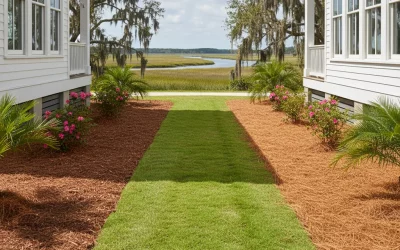
Lightweight and affordable, pine straw knits together, creating a mat that smothers seedlings. It breaks down faster than wood, so plan on refreshing yearly for peak performance. The soft, natural look pairs nicely with coastal longleaf pines.
Shredded Hardwood
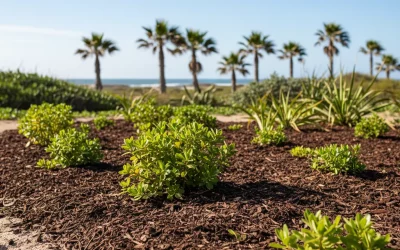
Double-ground hardwood offers dense coverage and rich color. Its weight keeps it from blowing away during coastal storms. Because hardwood decomposes slowly, you get longer weed protection between top-offs—perfect for commercial beds you’d rather not revisit every quarter.
Colored Wood Chips
Manufactured chips hold dye for vibrant curb appeal. Their chunkier size allows more airflow, reducing fungal issues. Be sure to buy from a trusted local supplier; inferior dyed mulches may contain pallets or construction debris that sprout weeds instead of stopping them.
Rubber Mulch
Made from recycled tires, rubber never decomposes, meaning you won’t add nutrients to the soil—but you will get long-term weed suppression. It’s ideal for playgrounds or high-traffic school walkways where safety cushioning matters as much as a weed-free surface.
Stone & Gravel
While technically not mulch, stone delivers unbeatable longevity. Lay a quality landscape fabric underneath, and weeds find it nearly impossible to anchor roots. The trade-off is heat; rock beds can raise soil temperature, which may stress tender shrubs during July heatwaves.
Tips to Maximize Weed Control With Mulch
If you’re about to drop fresh material, follow these quick wins first so weeds don’t stand a chance:
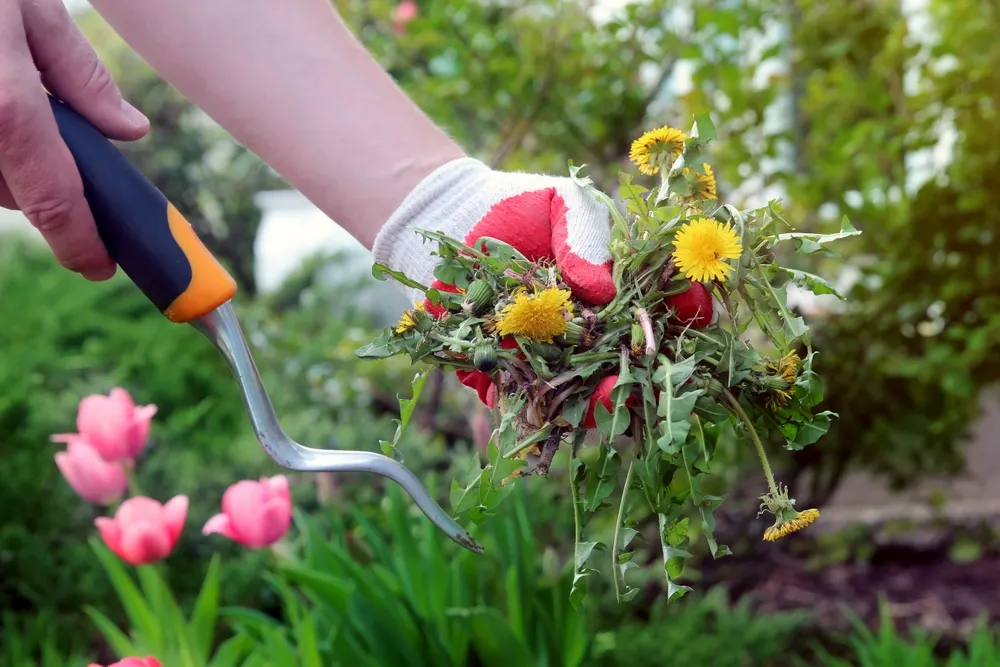
- Clear existing weeds, roots, and all.
- Cultivate the soil lightly, then tamp flat so mulch lies even.
- Edge beds six inches deep; mulch stays put, and grass can’t crawl in.
- Spread two to three uniform inches—thinner invites germination, thicker suffocates roots.
- Water deeply after installation; moisture helps mulch settle into a seamless blanket.
How to Pick the Right Mulch for Your Property
With so many textures, colors, and price points, choice can feel overwhelming. These pointers help narrow the field quickly and pick the best mulch to prevent weeds and bugs:
- Match lifespan to the maintenance schedule you can realistically keep.
- Consider foot traffic—kids’ play areas benefit from cushioned, splinter-free surfaces.
- Factor in local pests, for example, cedar or cypress chips naturally repel termites in sandy soils.
- Weigh aesthetics; dark hardwood makes flowering annuals pop, while straw keeps woodlands rustic.
- Budget for delivery and blowing service, not just the raw material.
Following these steps ensures you land on the best mulch to prevent weeds and bugs without second-guessing. Whichever material you choose, remember that the best one is only as effective as the depth and consistency of its application.
The Bottom Line: Mulch Alone or Mulch Plus Herbicide?
Because mulch blocks light and locks in moisture, most property owners see a 90–95 % reduction in new weed growth. Pairing a pre-emergent herbicide beneath the mulch can push control even closer to 100 % for retail plazas or HOA entrances that demand pristine beds year-round.
However, many homeowners prefer skipping chemicals altogether and simply topping up mulch each spring. Either path works—as long as coverage stays consistent and depth stays correct.
Keep Beds Beautiful With Bella Mulch
We’ve walked through the science, compared materials, and laid out best practices; now let’s put that knowledge to work. At Bella Mulch, we deliver premium mulch across South Carolina and Georgia. We grind, color, and test every batch for consistency, then dispatch our blower trucks to blanket your beds with pinpoint accuracy.
By ordering straight from a regional producer who values Integrity, Intentional Accuracy, Resiliency, and Pro-Active Communication, you gain a yard that stays cleaner, a schedule that stays lighter, and the confidence that your landscape investment will shine through every season! Ready to enjoy weed-free beds and a brighter curb appeal?