
Have you ever stepped outside on a summer afternoon, stared at faded, patchy mulch, and wondered if there’s a better way to protect your soil and keep weeds down? Or maybe you’ve paid for fresh mulch every spring only to watch it wash away in the next coastal storm—frustrating and expensive, right?
In this guide, you’ll discover practical solutions to these problems, whether you manage a busy commercial property or a backyard oasis. We’ll break down ten of the most popular materials homeowners and property managers consider when they’re curious about landscaping without mulch. You’ll see how each option stacks up on cost, durability, and upkeep—and why professional organic mulch installation often remains the smartest choice for landscapes. Let’s get started!
Why Look Beyond Traditional Mulch?
First, a quick reality check. Organic hardwood mulch delivers unbeatable moisture retention, temperature regulation, and soil-building benefits. Yet certain sites, like high-traffic walkways, windy exposures, or areas plagued by curious pets, tempt you to explore ground cover instead of mulch. Comparing options will help you set realistic expectations and avoid surprises down the road. When you understand exactly what to use instead of mulch, you’ll spend less time second-guessing and more time enjoying your landscape.
10 Best Mulch Alternatives for Landscapes
Below you’ll find ten materials often promoted as substitutes. For each, we provide a snapshot of cost per square foot, average lifespan, and maintenance needs so you can decide if one fits your property better than classic mulch:
1) River Rock & Pea Gravel
Smooth stones create a polished, coastal aesthetic—perfect for Hilton Head courtyards.
- Pros: Long-lasting (10+ years), excellent drainage, great for downspout splash zones.
- Cons: Higher upfront cost ($3–$6 / sq ft installed), radiates heat that can stress roots, weeds sprout unless fabric is installed and renewed.
- Upkeep: Annual leaf-blowing and occasional raking.
Many property owners love using rocks instead of mulch for sensory gardens, but remember, rocks don’t feed the soil like shredded pine bark. That said, if you decide to replace mulch with rock in a narrow side yard, plan for extra weed-control fabric.
2) Crushed Granite Fines
Also called decomposed granite, this compactable material forms stable paths.
- Pros: Firm walking surface, natural look, moderate price ($2–$4 / sq ft).
- Cons: Dusty during installation, can wash out on steep slopes, and offers zero organic matter.
- Upkeep: Top-dressing every 3–4 years.
If you’ve been asking what to use instead of mulch in high-foot-traffic zones, granite fines could work, though you’ll still need mulch around shrubs for moisture retention.
3) Lava Rock
Porous, lightweight volcanic rock adds a striking color contrast.
- Pros: Doesn’t compact, resists mold, lasts decades.
- Cons: Expensive to ship inland, sharp edges hurt bare feet, and heat retention near foundations.
- Upkeep: Minimal, but it’s hard to relocate once spread.
4) Rubber Mulch
Made from recycled tires, rubber is touted for playgrounds.
- Pros: Cushioning fall protection, won’t decompose, vibrant color choices.
- Cons: $6–$9 / sq ft installed, potential chemical leaching, absorbs heat.
- Upkeep: Occasional leaf-blower cleanups.
Families looking for dog-friendly mulch alternatives sometimes choose rubber; just verify the product is wire-free and meets ASTM safety standards.
5) Pine Straw
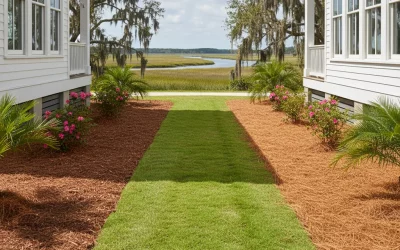
A Southern staple, pine needles blanket large beds easily.
- Pros: Affordable ($0.15–$0.25 / sq ft), acidifies soil for azaleas, lightweight.
- Cons: Blows away in coastal winds, flammable, and must be refreshed twice a year.
- Upkeep: Quick to install, but frequent replenishment.
Pine straw is a handy flower bed mulch alternative for certain plantings, yet it rarely delivers the long-term weed suppression of triple-shredded hardwood.
6) Leaf Mold & Compost
Shredded leaves and cured compost enrich soil fast.
- Pros: Virtually free if you DIY, boosts microbes, superb moisture retention.
- Cons: Breaks down within months, may introduce weed seeds, looks unfinished.
- Upkeep: Reapply yearly.
Gardeners exploring alternatives to mulch in flower beds appreciate compost’s nutrition but often top it with a thin layer of shredded mulch for appearance.
7) Shredded Hardwood Chips
Technically still organic mulch, but many homeowners source chips from tree services.
- Pros: Free or cheap, chunky texture resists washout, natural look.
- Cons: Inconsistent size, unknown pathogens, and color fades quickly.
- Upkeep: Refresh every 12–18 months.
If you need a quick substitute for mulch after a storm, chips help—though professional, kiln-dried mulch offers more predictable performance.
8) Bark Nuggets
Large nuggets from pine or cypress offer a rustic vibe.
- Pros: Slow to decompose, easy to blow leaves off, great around mature shrubs.
- Cons: Floats in heavy rain, costlier than shredded mulch, gaps let light reach weeds.
- Upkeep: Flip and top off every two years.
9) Living Groundcovers
Low-growing plants like creeping thyme, ajuga, or dwarf mondo grass knit together to block weeds.
- Pros: Adds color, cools soil naturally, sequesters carbon.
- Cons: Installation cost ($4–$8 / sq ft), irrigation needed while establishing, may spread into turf.
- Upkeep: Seasonal trimming and fertilization.
Homeowners researching ground cover ideas instead of mulch love the pollinator benefits, especially when blooms attract bees and butterflies through spring and summer. Living groundcovers also soften hardscape edges and fill awkward gaps where mulch tends to wash away.
10) Decorative Stone Over Fabric (Rockscape)
A minimalist look for ultra-low-water beds.
- Pros: Lifespan of 15–20 years, eliminates annual top-dressing, deters pests.
- Cons: $5–$10 / sq ft installed, installation labor-intensive, and soil compaction over time.
- Upkeep: Spot weed pulling, leaf blowing.
Property managers occasionally decide to replace mulch with rock in median strips; just remember that converting back to planting beds later can be costly and labor-intensive.
Comparing the Numbers at a Glance
Before we wrap up, here’s a quick reference on how the most common alternatives to mulch in landscaping measure against premium organic mulch.
| Material | Installed Cost (sq ft) | Average Lifespan | Yearly Maintenance Hours | Soil Health Benefit |
| Premium Organic Mulch | $1.75–$2.50 | 2 years | 2 | Excellent |
| River Rock | $3–$6 | 10+ years | 5 | None |
| Rubber Mulch | $6–$9 | 12–15 years | 3 | None |
| Pine Straw | $0.20 | 6–9 months | 4 | Moderate |
| Compost | $0.10 | 6 months | 3 | Outstanding |
| Living Groundcover | $4–$8 | Perennial | 6 | Good |
When total cost of ownership and plant health are weighed together, shredded hardwood mulch still delivers unbeatable value. Homeowners often ask, “Are there real alternatives to mulch in landscaping that require zero upkeep?” The honest answer is no.
Which Option Fits Your Property?
Every landscape is unique. Coastal sand, dense clay, full sun, deep shade—each factor tilts the scales between stone, straw, or classic mulch. If your beds sit beside a brick wall that bakes in July heat, rock may scorch roots. If you manage a corporate campus where appearances matter year-round, dyed hardwood could be refreshed in one easy visit from professional crews. For pet runs or playground zones, you might mix solutions: rubber beneath swings, mulch beneath shrubs.
Still dreaming of lush beds while practicing landscaping without mulch? Choosing ground cover instead of mulch—like dwarf mondo or sedum—may satisfy the look you want, but remember plants need establishment time and irrigation.
Quick Decision Checklist
Use these five questions to narrow your choice:
- How often are you willing to refresh or clean the material?
- Do you need to improve soil fertility for vegetables or ornamentals?
- Is glare or heat a concern for nearby windows or pets?
- Will heavy rain or flooding move lightweight materials?
- Is long-term cost more important than upfront savings?
Common Mulch Myths Busted for Good
Before wrapping up, let’s clear the air about a few persistent mulch myths that still make the rounds in garden conversations. Some sound convincing, but they don’t hold up once you dig into the details:
Myth 1: “Stone is maintenance-free.”
Reality: Weeds germinate in wind-blown dust atop rock within a season. Weed fabric slows, but doesn’t stop, growth.
Myth 2: “Rubber mulch is eco-friendly because it recycles tires.”
Reality: Rubber extends life in landfills but can leach zinc into soil, reducing earthworm activity.
Myth 3: “Mulch attracts termites.”
Reality: Termites don’t feed on mulch itself—they’re drawn to consistent moisture. Keeping mulch two inches deep and a few inches away from your home’s foundation prevents any issues.
Myth 4: “Mulch makes soil too acidic.”
Reality: Most modern mulches, especially pine straw and bark, cause only minimal pH changes after the first rainfall. In fact, they help balance temperature and moisture, improving root health long-term.
A high-quality shredded mulch, replenished every other year, often beats these issues while nourishing the soil web beneath your favorite camellias.
End the Weekend Hustle with Bella Mulch on Your Side
Your landscape deserves more than just a quick mulch drop—it deserves care, precision, and results that last. With Bella Mulch, you get premium mulch delivered and applied with the same attention we’d give our own yards. Since 2012, we’ve built our service around integrity, accuracy, and proactive communication, plus a little fun along the way.
When you schedule a blower-truck application, you skip the hard labor and still get rich color, consistent depth, and lasting weed control. Whether it’s a home garden, HOA entrance, or full commercial property, we leave your space spotless and ready to impress. And with easy online ordering and dependable delivery, you can spend less time working in your yard and more time enjoying it under the Carolina or Georgia sunshine. Take a look at our mulch types and order today!