

Have you ever stood in your Bluffton backyard, shovel in hand, unsure whether to drop a load of wood chips or unload a pallet of river rock? That split-second pause can feel overwhelming when you realize the decision affects your wallet, weekend workload, and the health of every shrub on your property.
Across coastal South Carolina and Georgia, homeowners wrestle with the same choice. Should you spread mulch or stone for landscaping beds, pathways, and play areas? In this guide, we’ll pull back the curtain on real costs, long-term maintenance, and plant health so you can make the smartest call for your yard. Read on!
Cost vs. Long-Term Investment
Before you pick up the phone for a mulch delivery service, it helps to compare what you’ll spend today and over the next decade.
Initial Cost Breakdown
Wood mulch averages $40–$50 per cubic yard delivered in the Lowcountry, while decorative gravel starts near $90 and river rock tops $120. Rubber options sit in the middle, prompting many to ask, “Is rubber mulch better than wood mulch?” Up-front, stones cost more—but you buy them once.
Replacement and Hidden Expenses
Mulch decomposes. Expect to refresh 2–3 inches annually in high-sun areas or biennially in shaded spots. Over five years, that adds up—even if you order bulk mulch at a discount. Stone, by contrast, seldom requires replacement; however, you may need weed-blocking fabric, edging, or toppers, increasing the first-year bill. Budget wisely if you’re eyeing stone instead of mulch around perennial beds.
The True Ten-Year Picture (Example Costs)
- Pine or hardwood mulch: $45/yard × 2 yards × 5 refreshes = $450
- Decorative gravel mulch: $95/yard × 2 yards once = $190
- Labor for spreading: similar for both, but stone typically demands heavier equipment.
Suddenly, the math shifts. If you prefer a seasonally fresh color, mulch pays off. If you crave permanence, stone wins.
Maintenance & Durability
Upkeep may tip the scales even more than cost. Let’s see how each material performs through coastal storms, blistering summers, and occasional frost.
Weeding, Fading, and Shifting
Wood mulch suppresses weeds but breaks down, meaning you’ll re-spread and rake. Colored products—hello, red mulch around trees—can fade after 12–18 months of UV exposure. Stones won’t rot, but soil and leaf litter build up between them, sprouting crabgrass by year two. A quick hosing may suffice, unless you installed black rock instead of mulch, which shows every fallen pine needle.
Edging and Erosion
Lightweight bark scatters in heavy rain. Anchoring beds with a border, or choosing heavier blends like rock and mulch landscaping, helps. Stones stay put, although smaller pebbles may migrate onto lawns, dulling mower blades. Erosion risk grows on slopes, so consider an erosion control mulch if your yard sees runoff.
House Perimeter Concerns
Many clients wonder about “rocks or mulch against house” foundations. Organic mulch invites insects if piled too high, yet stone radiates heat against siding. Keep either material a few inches below the moisture barrier and aim for good drainage.
Plant Health & Ecology
Here’s where wood truly shines.
Soil Temperature and Moisture
Mulch lowers soil temperatures by up to 10°F in August and cuts evaporation nearly in half. That’s priceless for azaleas, vegetables, or a new mulch bed around tree roots. Stones, however, absorb heat; in July sunlight, a river rock instead of a mulch border can roast shallow roots and throw reflected heat onto nearby blooms.
Soil Nutrition and pH
As mulch decays, it feeds worms and releases slow nutrients. Stone adds nothing and may raise soil alkalinity, stressing acid-loving camellias. If you want a permanent weed cover in non-planted zones—say, under an HVAC unit—stone works. But for edibles or mulch for raised garden beds, organic layers are unbeatable.
Specialty Products
- Mulch mats for trees offer a tidy, no-spread alternative that still enriches soil.
- Alternatives for mulch in landscaping, such as pine straw or composted leaves, mirror many benefits at a lower cost.
A Visual and Design Perspective
Function matters, but looks seal the deal.
Color and Texture Choices
Wood chips come in cedar, pine, chocolate, and vivid dyes. Trend-setters blend red and black mulch designs to frame entryways. Stone boasts limitless textures—polished river pebbles, angular slate, or coastal shells—ideal for modern landscaping themes that replace mulch.
Inspiration for Mixing Both
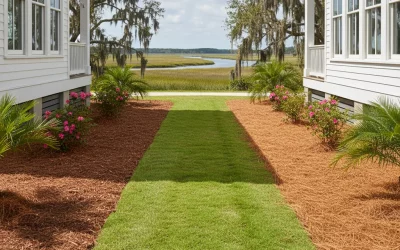
Search “front yard rock and mulch landscape pictures,” and you’ll notice layered accents: a central bed of bark edged by river pebbles, or stepping-stone paths woven through brown mulch. Such landscaping ideas with mulch and rocks provide depth without overwhelming the eye. When you need a pro touch, our mulch installation team in Beaufort can deliver a balanced mix.
Decision Matrix: What Fits Your Yard?
The chart below distills the above into practical guidance for your next Saturday project.
Choose Wood Mulch If…
- You grow perennials, veggies, or fruit trees needing cool, moist soil.
- You enjoy refreshing color each spring.
- You prefer lighter material to spread without heavy machinery.
Choose Stone If…
- You crave ultra-low maintenance in non-planted zones.
- Are rocks better than mulch? If you live in a windy micro-climate, rocks are better than mulch, and it becomes clear after every storm.
- You want modern curb appeal with landscaping with mulch and rock accents that last for decades.
Hybrid Solutions
Many homeowners ask, “Are rocks or mulch better for landscaping?” The answer might be both. Frame specimen shrubs with bark for nutrients, then define outer rings with stone. This stone or mulch layering controls weeds and adds contrast. When you crave a fresh look later, swap pathways with mulch or rocks as trends shift.
Practical Design Considerations Homeowners Overlook
Beyond cost and maintenance, small design decisions can shape how your yard functions day to day. One common question is whether mulch or rocks for landscaping make more sense in high-traffic areas like play zones or walkways, where comfort and impact absorption matter just as much as appearance. In more contemporary spaces, some homeowners intentionally choose landscaping stone instead of mulch to create clean lines around metal planters, outdoor seating, or minimalist entryways.
For mixed-use yards, combining materials often delivers the best results. Thoughtful landscaping with mulch and rocks allows you to protect plant health near roots while keeping edges tidy and durable. This approach also reduces upkeep by limiting where organic material breaks down. When planned correctly, strategic landscaping mulching helps control weeds, manage moisture, and cut down on weekly chores without sacrificing curb appeal.
The Bella Mulch Advantage—Your Landscape, Upgraded
We’ve walked through cost, upkeep, and ecology so you can decide with confidence. Now, let’s talk about solutions. At Bella Mulch, we blend local knowledge with a streamlined process: order online, schedule delivery, and enjoy professional spreading across South Carolina and Georgia. From nutrient-rich blends for azalea beds to decorative stone installs that tackle salty sea breezes, we handle every detail with integrity and proactive communication.
Our experience shows that the right ground cover saves water, boosts curb appeal, and frees up your weekends. Whether you lean toward a classic bark refresh, a durable stone accent, or a smart combination, we’re ready to deliver quality materials quickly and accurately. Let’s turn your design sketches into reality—contact us to learn more.