
Mushrooms popping up in your mulch beds overnight? You’re not alone. One week your landscape looks clean and fresh, and the next you’re staring at little caps scattered across your yard. It’s frustrating, and if you have kids or pets, you might even wonder if they’re dangerous.
The good news is most mulch mushrooms aren’t harmful. They’re usually a natural sign that organic material is breaking down. Still, that doesn’t mean you want them sticking around. If you’re searching for how to get rid of mushrooms in mulch, here’s a practical, non-toxic plan that actually works.
Why Mushrooms Show Up in Mulch
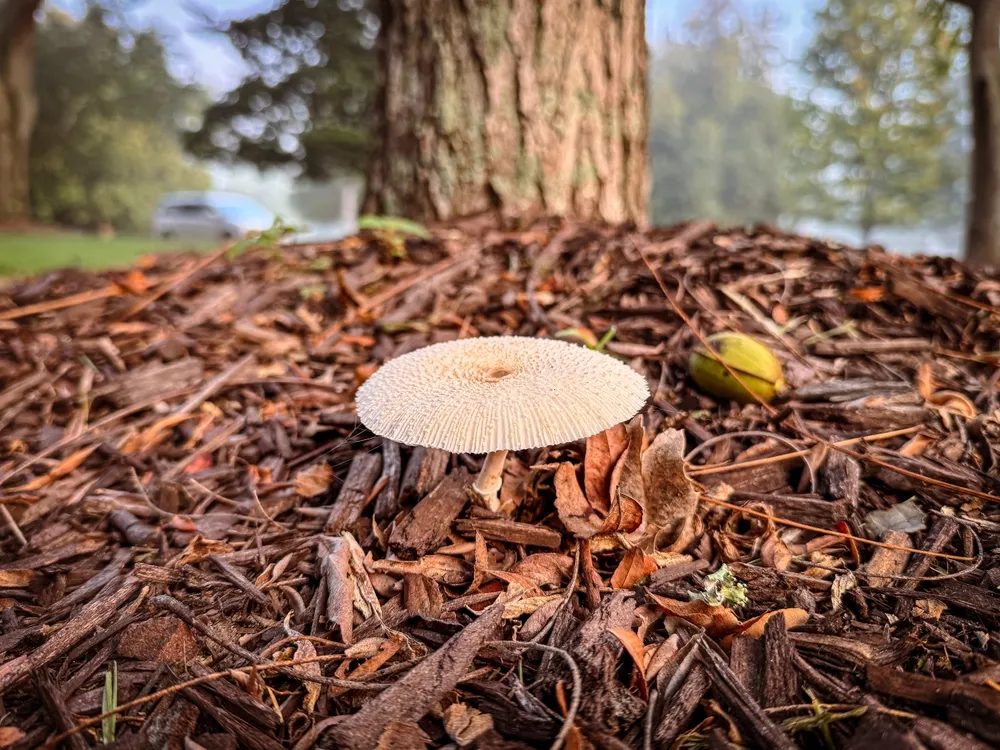
Before you tackle removal, it helps to know what’s happening. Mulch is made from organic material like hardwood bark. When moisture and warmth combine, especially in South Carolina and Georgia’s humid climate, fungi thrive. Mushrooms are simply the visible “fruit” of that underground fungal network.
Heavy rain, overwatering, compacted beds, or overly thick mulch layers all make growth more likely. It’s natural, but manageable.
4 Ways to Remove Mushrooms Quickly
If you’re dealing with active growth, start here.
1. Pull Them by Hand (Safely)
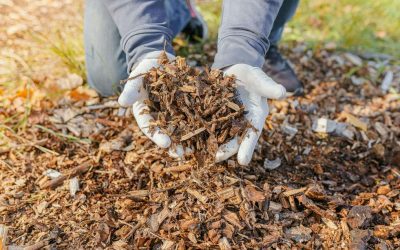
The simplest method is physical removal. Wear gloves, grab the mushrooms at the base, and remove them along with a bit of surrounding mulch.
Place them in a sealed bag before tossing them. Don’t compost them unless you want spores spreading elsewhere. This won’t solve the root issue, but it immediately improves appearance and safety.
2. Use a Mild Household Solution
If you’re wondering about how to kill mushrooms in mulch, a light application of baking soda or vinegar can help.
- Mix 1 tablespoon of baking soda per gallon of water
- Or spray white vinegar directly on the mushroom caps
These solutions can dry them out. Be careful not to oversaturate nearby plants, as vinegar can harm foliage. Avoid harsh chemical treatments. A heavy-duty fungicide for mushrooms in mulch often isn’t necessary for residential beds.
3. Improve Drainage
Persistent mushrooms usually mean too much moisture.
Loosen compacted soil. Check sprinkler timing. Make sure water isn’t pooling in low spots. Better drainage reduces the environment fungi love.
If your beds sit on a slope, learning how to keep mulch in place on slope can also help prevent clumping and trapped moisture.
4. Turn and Aerate the Mulch
Use a rake to fluff and rotate your mulch layer every few weeks. This increases airflow and helps dry out damp pockets. It also supports general seasonal mulch maintenance and keeps your beds looking fresh.
4 Long-Term Prevention Strategies
Short-term removal helps, but prevention keeps them from coming back.
1. Watch Your Mulch Depth
Too much mulch traps moisture.
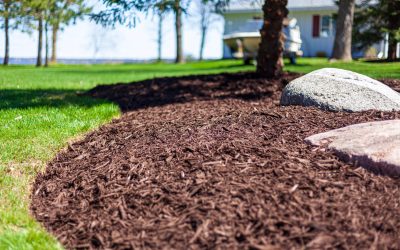
Aim for 2–3 inches in most garden beds. If you’re layering new mulch yearly, ask yourself: do you remove old mulch or just keep piling it on?
If buildup is thick and compacted, it may be time to remove old mulch before adding a fresh layer.
2. Reduce Overwatering
Mulch retains moisture, which is great for plants—but not for fungi.
Adjust irrigation so you’re watering roots, not soaking the entire bed surface daily.
3. Improve Air Circulation
- Trim back dense shrubs that block airflow.
- Space plants properly.
- Avoid tightly packed mulch in shaded areas.
Better airflow = drier mulch surface.
4. Refresh When Needed
Old, decomposing mulch creates ideal fungal conditions. If you’re unsure should you mulch every year, the answer depends on breakdown and thickness. In humid Southeast climates, a light annual refresh works well—but not always a full re-layer.
Common Mulch Mushrooms (And What They Mean)
You don’t need to become a mycologist, but basic mulch mushroom identification can ease concerns.
- Bird’s Nest Fungi – Tiny cup-like shapes with “eggs” inside. Harmless, common in hardwood mulch.
- Stinkhorns – Tall, odd-looking mushrooms with a strong odor. Unpleasant but not dangerous.
- Yellow Cap Mushrooms – Bright yellow, often in damp beds. Common in humid regions.
Most mushrooms in mulch are signs of decomposition, not toxicity. Still, if pets frequently roam garden beds, remove visible growth quickly.
Many homeowners ask, “Does mulch attract mice?” Generally, mulch itself doesn’t cause rodent problems, but thick, undisturbed layers can create shelter. Keeping mulch maintained and aerated helps avoid that issue too.
Keep Your Beds Clean and Healthy
If you’ve been searching how to get rid of mushrooms in mulch, remember this: they’re manageable. Physical removal, moisture control, proper depth, and occasional turning make a big difference.
Healthy mulch beds balance moisture, airflow, and fresh material. With proper mulch installation, mulch continues doing what it does best, protecting roots, controlling weeds, and boosting curb appeal.
If your beds need a refresh or you’re ready for clean, high-quality mulch delivered straight to your property, Bella Mulch makes it simple. You can explore options, calculate coverage, and order online anytime at our online store.