
Thinking About Installing Playground Rubber Mulch?
Is your play area hard to keep safe and clean? Do you get tired of raking wood chips that wander off the border? Are you worried about falls on a packed surface? If you’re curious about installing playground rubber mulch, you’re in the right spot.
This quick guide explains what it’s made of, how it behaves, and where it shines. You’ll see the main pros and the real drawbacks. You’ll also learn how it compares to organic mulch in gardens and play zones. Keep reading to pick the best fit with confidence.
What’s Inside Rubber Playground Mulch
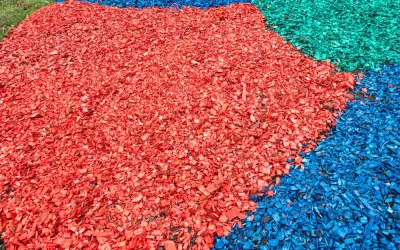
Most rubberized mulch comes from recycled tires. Manufacturers clean, shred, and screen the rubber into nuggets. Pigments add color. The base polymer is usually SBR (styrene-butadiene rubber), a springy material that resists rot and holds shape.
Rubber is hydrophobic, so it doesn’t soak up water. It cushions impact because it compresses and then rebounds. Installed at the right depth, it can help meet playground impact standards for fall protection. It also drains quickly, so kids can get back to playing sooner after rain.
Pros: Why People Go Rubber for Play Spaces
Rubber mulch changes how a play area feels and performs. Here’s where it helps most:
Softer Landings
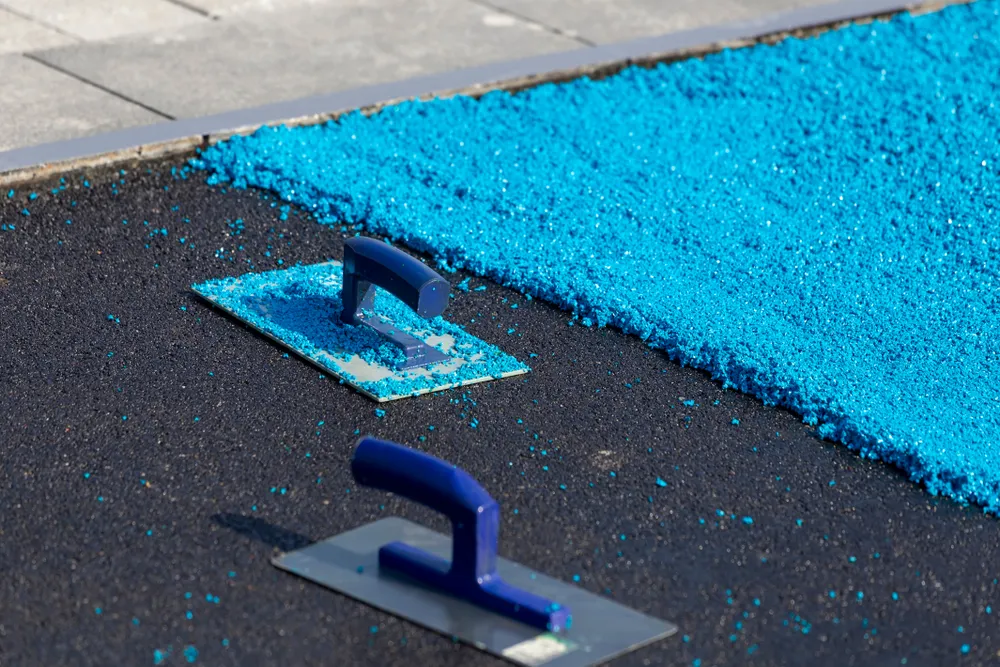
Rubber nuggets absorb impact well. With proper depth and borders, they reduce hard hits under swings and slides.
Stays Put and Drains
It resists compaction and lets water move through. That means fewer puddles and less mud tracking into the house.
Low Upkeep, Long Life
It doesn’t break down fast like wood. You top it off less often, saving time and labor when installing playground rubber mulch for large areas.
Clean and Pest-Resistant
It doesn’t attract termites or carpenter ants. You’ll do less raking and see fewer splinters.
Cons: The Trade-Offs to Consider
No surface is perfect. Keep these in mind before installing rubber mulch in your playgrounds:
Heat on Sunny Days
Dark rubber can get hot. Shade sails or lighter colors help. So does raking to fluff the surface.
Not a Soil Builder
Unlike organic mulch, rubber doesn’t feed the soil. Use it in play zones, not vegetable beds.
Chemicals and Smell
Rubber can initially carry a light tire odor. Some products may leach small compounds; borders and proper drainage help manage runoff.
Why Natural Mulch May Be the Better Choice
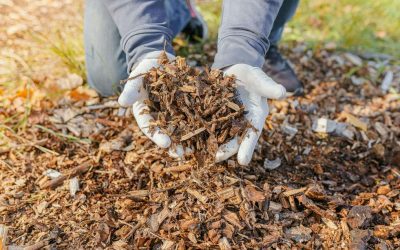
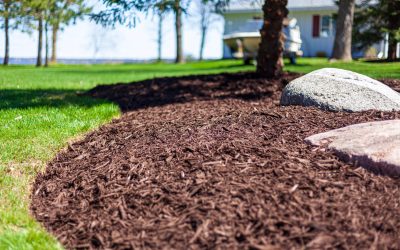
While rubber mulch has its place, natural mulch offers long-term benefits that synthetic options can’t match. Wood-based mulch helps regulate soil temperature, retains moisture, and breaks down over time to enrich the ground beneath your play area. That means your landscaping benefits just as much as your playground.
It also blends into the environment more naturally, creating a softer, cooler surface that children can safely enjoy year-round. Plus, natural mulch avoids the chemical concerns tied to recycled rubber, giving parents and caregivers extra peace of mind.
Upgrade Your Play Area with Bella Mulch
At Bella Mulch, we build safe, great-looking spaces across South Carolina and nearby Georgia. We produce and color mulch locally, deliver on schedule, and install with care. Our team helps you set the right depth, pick colors, and plan borders that hold up.
We also make planning simple with our mulch calculator, so you order the right amount the first time. When you weigh the options, natural mulch provides beauty, safety, and soil health in one choice. Rubber mulch may offer convenience, but nothing beats the long-term value of organic mulch.