
Mulching is one of the simplest ways to improve the health and appearance of your landscape, especially in coastal areas like Bluffton, SC and Savannah, GA, where heat and humidity can be tough on soil. A properly mulched yard helps retain moisture, suppress weeds, protect plant roots, and give your outdoor space a clean, finished look.
If you’re planning a DIY mulch project or simply want to understand the process before ordering delivery, this guide will walk you through everything step by step.
Preparing for Mulch Installation
How to Calculate Mulch for Your Project
Before you order mulch, you need to know how much coverage your space requires. Start by measuring the length and width of the area you plan to mulch, then multiply those numbers to find the total square footage.
Most residential landscaping projects in Bluffton and Savannah do best with 2 to 3 inches of mulch, which helps protect roots from intense summer heat without smothering the soil. To avoid under-ordering (or overpaying), use our Yardage Mulch Calculator tool below (at the end of this page) to get an accurate estimate based on your exact measurements.
Setting Up the Area
Once you know how much mulch you need, prep the area properly. Remove weeds, fallen leaves, and any old mulch that’s compacted or breaking down unevenly. In humid Lowcountry conditions, old mulch can trap moisture and encourage fungus if it isn’t refreshed regularly.
A clean, level base helps new mulch spread evenly and stay in place longer.
Step-by-Step Mulch Installation
Follow these steps to get professional-looking results.
1. Choose the Right Mulch for Your Climate
Not all mulch performs the same in South Carolina and coastal Georgia. Hardwood mulch and pine bark mulch are popular choices because they hold up well in heat, resist floating during heavy rain, and break down naturally over time to improve soil quality.
Lightweight mulches may wash away more easily during summer storms.
2. Prepare the Soil
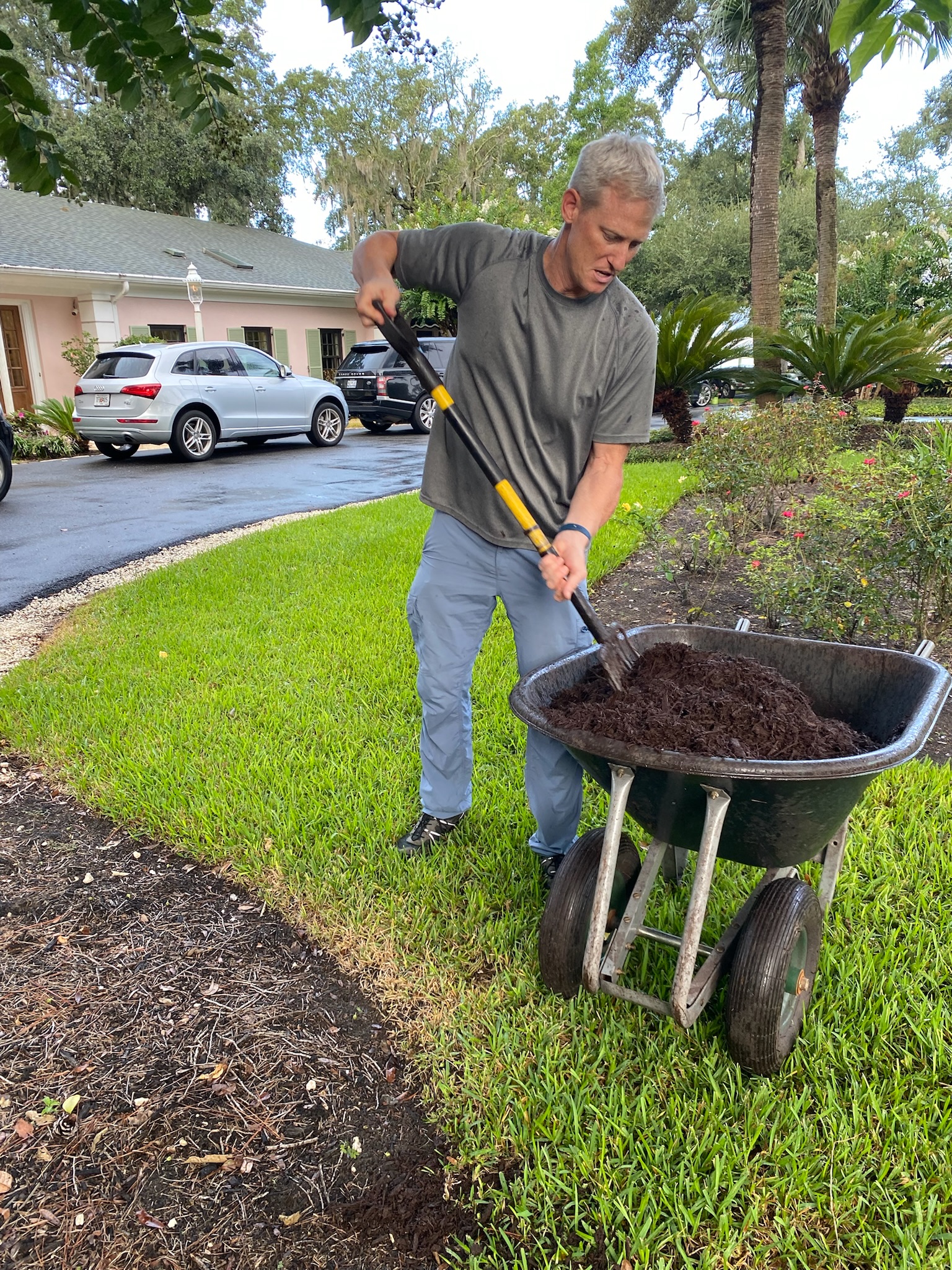
Loosen the soil slightly with a garden fork or rake. This helps water soak in instead of running off. If your soil is sandy or compacted, mixing in compost before mulching can make a noticeable difference in plant health.
3. Apply the Mulch Evenly
Spread mulch evenly across the surface, aiming for 2–4 inches deep depending on the area. Flower beds usually need less depth than tree rings or large landscape beds.
Avoid uneven piles, which can trap moisture in some spots while leaving others exposed.
4. Avoid Mulch Volcanoes
Never mound mulch directly against tree trunks or plant stems. This common mistake, often called a “mulch volcano,” can cause rot, invite pests, and weaken plants over time. Leave a few inches of space around the base so air and water can circulate.
5. Water the Mulch
Lightly watering the mulch after installation helps settle it into place and reduces the chance of it shifting during the next rainfall.
How to Prevent Mulch From Washing Away in Heavy Rain
In Bluffton and Savannah, sudden downpours are common. To keep mulch from washing away:
-
Use heavier mulch types like hardwood or pine bark
-
Keep mulch depth consistent (not too thick or thin)
-
Edge beds properly to slow water flow
-
Avoid sloping mulch beds without borders
Professional-grade bulk mulch typically performs better than lightweight bagged mulch in these conditions.
The Best Mulch for South Carolina Heat
South Carolina heat can dry out soil quickly. Mulches that perform best include:
-
Hardwood mulch for moisture retention
-
Pine bark for durability and airflow
-
Natural, undyed mulch to reduce heat absorption
These options help regulate soil temperature and protect roots during long summer stretches.
Achieve Your Dream Garden With Bella Mulch
Installing mulch the right way makes a big difference in how long it lasts and how well your landscape performs. Still, figuring out how much mulch you need or choosing the best option for Lowcountry conditions can feel overwhelming.
That’s where Bella Mulch comes in. We serve homeowners throughout Bluffton, SC and the Savannah, GA area, offering high-quality bulk mulch, reliable delivery, and expert guidance tailored to our local climate.
Whether you’re refreshing garden beds or tackling a full landscape upgrade, our team is here to help you get it done right. Reach out to Bella Mulch today and take the stress out of your next mulching project.
Mulch Installation FAQs for Bluffton & Savannah Homeowners
HOW MUCH DOES A YARD OF MULCH WEIGH?
A cubic yard of mulch usually weighs between 400 and 800 pounds, depending on the material and moisture level. Wet mulch weighs more.
HOW DEEP SHOULD I SPREAD MULCH?
For most residential landscaping, a depth of 2 to 3 inches is ideal. This provides enough coverage to retain moisture and suppress weeds without smothering the soil.
WHAT IS A "MULCH VOLCANO" AND WHY SHOULD I AVOID IT?
A mulch volcano occurs when mulch is piled high against a tree trunk. This can lead to rot and pest issues. You should always leave a few inches of space around the base of plants and trees for proper air circulation.
SHOULD I REMOVE OLD MULCH BEFORE ADDING NEW LAYERS?
Yes, it is best to remove old mulch that is compacted or breaking down unevenly. This prevents moisture from being trapped, which can lead to fungal growth.
HOW CAN I PREVENT MY MULCH FROM WASHING AWAY DURING HEAVY RAIN?
To keep mulch in place, use heavier types like hardwood or pine bark, ensure the depth is consistent, and properly edge your garden beds to slow water flow.