
Living near the coast has its perks. Beautiful scenery, mild winters, and a long growing season make it easy to spend more time outdoors. But if you’ve landscaped in the Lowcountry for any length of time, you’ve probably noticed that some areas of your yard seem to dry out much faster than others.
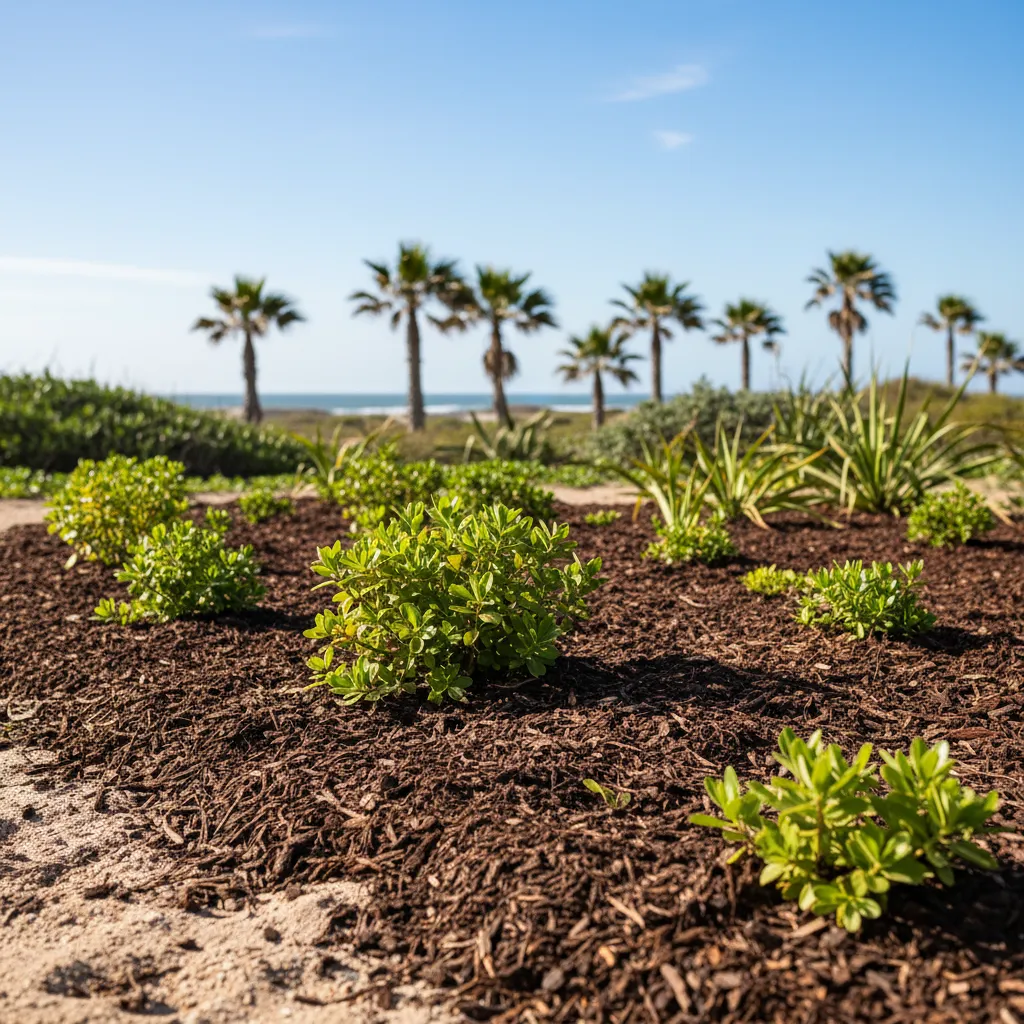
That’s because sandy soil doesn’t behave the same way as heavier soils. Water moves through it quickly, nutrients don’t stay in place for long, and summer heat only speeds up the process.
The good news? A thoughtful mulch strategy can help. Choosing the right mulch for sandy soil gives your landscape an extra layer of protection where it needs it most.
Let’s take a walk around the yard.
First Stop: The Front Yard
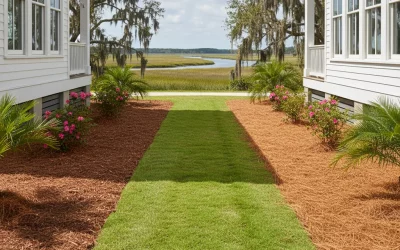
The front landscape is usually the first thing people notice—and often the first place to show signs of drying out.
Foundation beds are commonly exposed to full sun for much of the day, and nearby sidewalks or driveways can reflect additional heat onto the soil. Even after watering, these areas may lose moisture surprisingly fast.
This is where mulch does some of its best work. A fresh layer helps shade the soil, slowing evaporation and giving moisture more time to reach plant roots. Over time, it also helps keep landscape beds looking cleaner by reducing exposed soil and limiting weed growth.
For many homeowners, the front yard is where the benefits of mulch for sandy yards become noticeable first.
Next, Head Over to the Trees
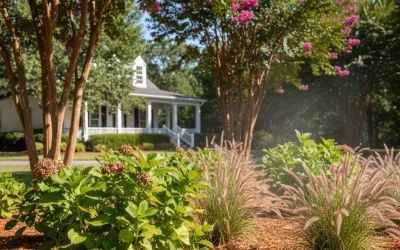
Tree rings often seem like low-maintenance areas, but they have their own challenges.
Large trees compete with surrounding plants for water, and their roots naturally absorb moisture from the soil. When that soil is sandy, it can dry even more quickly during warm weather.
Adding mulch around trees helps create a more stable environment for those roots by reducing moisture loss and insulating the soil from extreme temperatures.
The key is applying mulch correctly. Spread it in a wide, even ring and leave a few inches of space around the trunk. That simple step helps protect the tree while avoiding the common mistake of creating a mulch volcano.
Now Walk to the Backyard
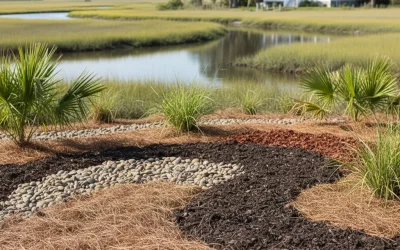
Backyards don’t always receive the same amount of sunlight as the front of the house. Some areas stay shaded for much of the day, while others receive full afternoon sun.
Instead of treating every bed the same, pay attention to how each part of the yard behaves.
Do certain plants need watering more often? Are some beds losing mulch faster after heavy rain? Are there areas where bare soil seems to appear every season?
These small observations help you decide where fresh mulch will make the biggest difference.
Successful coastal soil landscaping often starts by understanding how each section of the yard responds to local conditions rather than assuming every bed needs the same amount of attention.
Finally, Take One Last Look
Before ordering mulch, step back and look at the landscape as a whole.
Does every bed actually need new mulch?
Sometimes the answer is yes. Other times, only a few high-exposure areas need a light refresh while the rest of the landscape is still performing well.
A quick inspection can help you spot:
-
Beds where the mulch has thinned out
-
Areas where the soil dries unusually fast
-
Places where weeds are becoming more common
-
Sections where the mulch has broken down significantly
Refreshing only the areas that need attention can save both time and material while keeping your landscape looking consistent.
Your Landscape Doesn’t Need Different Soil—It Needs the Right Support
Sandy soil isn’t something to fight against. It’s simply part of living in the Lowcountry.
The goal isn’t to change the soil overnight. It’s to give it the support it needs through thoughtful maintenance and quality mulch that helps reduce moisture loss and improve growing conditions over time.
Small changes made consistently often have the biggest impact on how your landscape looks and performs.
Bella Mulch Helps Lowcountry Landscapes Thrive
Every property is different, but we know one thing they all have in common: Lowcountry landscapes deserve materials that are ready for local conditions.
At Bella Mulch, we help homeowners choose quality mulch for every type of landscape project, from refreshing tree rings to updating entire garden beds. We make it easy to get dependable mulch delivered directly to your property, so you can spend less time hauling bags and more time enjoying your yard.
We know coastal landscapes because they’re our landscapes, too.