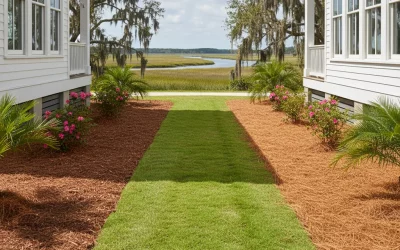

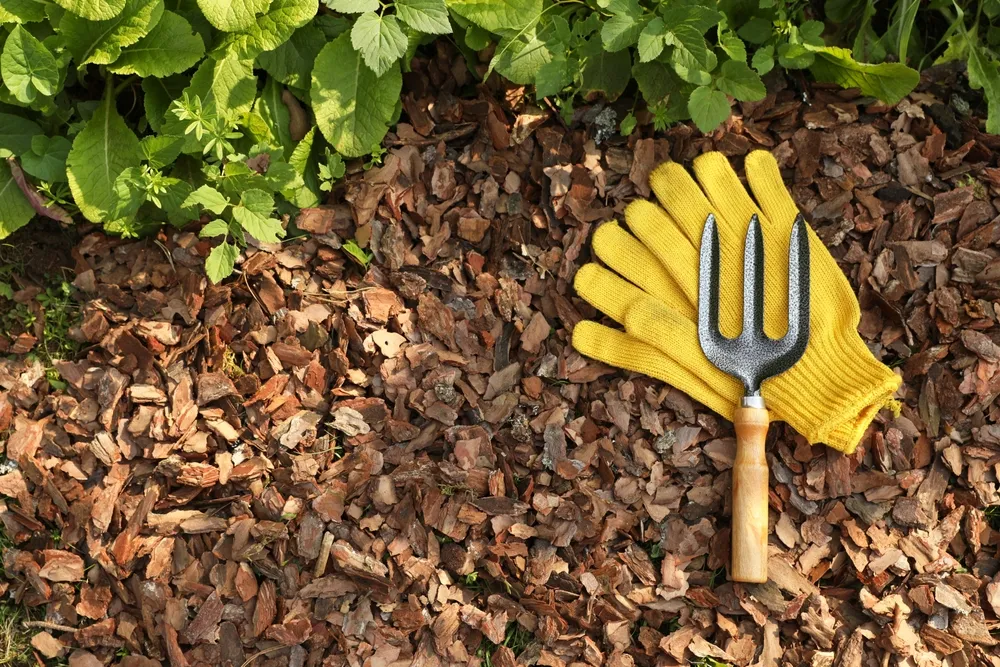
A lot of landscaping advice sounds complicated. Mulching isn’t one of those things.
In fact, most problems happen when people try to do too much.
More mulch. More layers. Bigger piles around trees.
The result is often a landscape that looks freshly updated but isn’t getting the full benefit of the mulch itself. Knowing the proper way to mulch comes down to understanding a few simple principles: where it should go, how deep it should be, and where it definitely doesn’t belong.
If you’ve ever wondered whether you’re using enough mulch—or too much—you’re not alone.
Mulch Is Meant to Help the Soil, Not Hide It
One of the easiest mistakes to make is thinking mulch should completely bury everything beneath it.
The goal isn’t to create a thick blanket that covers every inch of visible soil. The goal is to create a protective layer that helps regulate moisture, reduce weed growth, and protect roots from temperature swings.
When mulch is applied correctly, it works quietly in the background. Plants stay healthier, soil holds moisture longer, and landscape beds look more maintained.
When it’s overdone, those benefits can start working in reverse.
Why Mulch Volcanoes Keep Showing Up Everywhere
Once you notice a mulch volcano, you start seeing them everywhere.
They’re the large mounds of mulch piled around tree trunks, often several inches higher than the surrounding landscape. While they may look neat at first, they’re one of the most common tree-care mistakes.
A tree’s trunk isn’t supposed to stay covered in mulch. Constant moisture against the bark can create conditions that encourage rot, disease, and pest activity.
That’s why understanding how to mulch around trees is one of the most important parts of proper mulching.
The trunk should remain visible. The roots get the mulch. The trunk gets breathing room.
Think Wide, Not Tall
If mulch volcanoes aren’t the answer, what does good tree mulching actually look like?
The easiest way to picture proper tree mulching is to imagine a wide ring around the tree rather than a mound against it.
A broad mulch ring helps protect the root zone where trees absorb water and nutrients. It also creates a cleaner appearance while helping reduce competition from weeds and grass.
Instead of building upward, spread outward.
Trees benefit far more from additional coverage than additional height.
The Depth Question Matters More Than Most People Realize
When homeowners search for how many inches of mulch to put down, they’re often expecting a surprisingly large number.
The reality is much simpler.
Most landscape beds perform best with two to three inches of mulch. That’s enough to help conserve moisture and suppress weeds without creating airflow or drainage issues.
More than that can sometimes create problems, especially when mulch is added year after year without checking what’s already there.
Before ordering more mulch, take a quick look at your existing beds. You may need less material than you think.
A Fresh Layer Doesn’t Always Mean Starting Over
One of the biggest misconceptions about mulch is that every season requires a complete replacement.
In many cases, it doesn’t.
As mulch naturally breaks down, it contributes organic matter to the soil. That’s a good thing. Removing perfectly usable mulch every year can create extra work and unnecessary expense.
Instead, check the depth and condition of the existing material.
If coverage is still fairly even, a light refresh may be enough to restore color and appearance while maintaining the proper depth.
Sometimes landscaping looks its best when you build on what’s already working.
4 Signs Your Mulch Needs Attention
Not sure whether it’s time to refresh your mulch? A few clues can help.
- The color has faded significantly
- Bare soil is becoming visible
- Weeds are appearing more frequently
- Mulch has become compacted or uneven
These signs don’t always mean full replacement is necessary, but they often indicate it’s time to evaluate your landscape beds.
The Best Mulch Jobs Usually Go Unnoticed
Most people don’t walk past a beautiful landscape and compliment the mulch.
They notice healthy plants. Clean edges. Well-defined beds.
That’s because mulch is doing exactly what it’s supposed to do.
When applied correctly, it supports the rest of the landscape without becoming the center of attention.
Bella Mulch Helps You Start With the Right Foundation
Good mulching begins with quality materials. At Bella Mulch, we help homeowners throughout the Lowcountry get dependable mulch delivered directly to their properties, making it easier to tackle landscape projects with confidence.
Whether you’re refreshing garden beds, updating tree rings, or improving your property’s curb appeal, we’re here to help you get the mulch you need without the extra hassle.
After all, your trees deserve better than volcanoes.