

Are you tired of watching your fresh mulch fade in just one season? You spread a fluffy blanket of bark in spring, only to see it bleach, thin out, and invite weeds by fall. Sound familiar? The constant cycle of buying, hauling, and re-spreading mulch can feel like a chore that never ends—both for your weekend schedule and your wallet.
In this guide, you’ll see how wood chips stack up against decorative stones in four key areas: cost, maintenance, plant health, and curb-appeal durability. Keep reading to decide whether it’s finally time to embrace decorative stone or double down on fresh organic cover.
Upfront & Lifetime Cost Analysis
No landscape choice should begin without looking at dollars and cents. The initial outlay for bagged or blown-in mulch is generally lower than the cost of decorative river rock or gravel. However, mulch needs a top-off every 12–18 months, while stone often lasts decades with minor touch-ups.
Is rock or mulch cheaper over five years? In Bluffton and the rest of the Lowcountry, mulch might run $35 per cubic yard installed, while stone can eclipse $120 when you factor in delivery, underlayment fabric, and heavier labor. Yet mulch’s replenishment schedule means total spending can equal or surpass stone by year three. If you’re tallying the true cost to replace mulch with rocks, remember to include removal and disposal of old material, rental of wheelbarrows or blower trucks, and any weed-barrier upgrades you’ll need to install.
Maintenance Requirements
Even if you’re willing to spend more up front, day-to-day upkeep plays a big role in satisfaction. Below, you’ll find three maintenance angles that matter most to busy property owners.
Weed Control
When choosing mulch or rock, start by considering how much yardwork you’re willing to handle. Mulch provides a natural buffer against sunlight, but seeds can still germinate in the decomposing surface layer. You’re likely to pull sprouts after every heavy rain. Stone, on the other hand, needs a high-quality landscape fabric beneath it; without it, weeds can slip through gaps. Expect to spot-spray or hand-pull several times each season with both options, though stone surfaces make root removal easier once plants break through.
Cleaning Debris
Fallen leaves, pine needles, and acorns tend to nestle into mulch and disappear—convenient in autumn, but messy come spring when you want a pristine bed. Stones collect debris on top, requiring a blower or rake for a quick tidy. If you live beneath oaks or pines, consider whether you’d rather stir mulch into the soil or blow gunk off pebbles every few weeks. For heavy clay yards, pairing rock beds with mulch for clay soil around key trees can balance appearance and convenience.
Annual Upkeep
Mulch fades and compresses, so plan on at least a 2-inch refresh each year. That means scheduling deliveries, moving piles, and carving out several hours—or hiring a crew. Stone may shift or settle, but most homeowners only rake it back into place during spring cleanup. If stormwater is an issue, erosion-control mulch around slopes might still be necessary, even in landscapes dominated by rock.
Environmental Impact & Plant Health
What sits on your soil affects everything about its life below the surface. Let’s break down three often-overlooked factors:
Soil Temperature
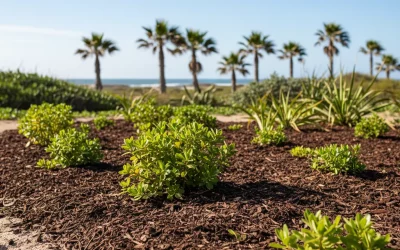
Organic mulch insulates roots from summer scorch and winter chill. Or if you want to replace mulch with rocks, river rock, especially darker colors, can absorb and radiate heat, raising root-zone temperatures by 5–15 °F. For shallow-rooted ornamentals like azaleas, that spike can trigger stress in July’s 95-degree South Carolina afternoons.
Moisture Retention
Mulch acts like a sponge, soaking up rainfall and releasing it slowly. Stone allows water to pass through swiftly, which is ideal for succulents but less so for thirsty hydrangeas. If you’re battling drought, an organic layer can reduce irrigation needs by up to 25 %. Those in consistently damp coastal pockets might prefer rock to avoid soggy beds.
Nutrient Contribution
As mulch breaks down, it feeds the soil with carbon and trace minerals, gradually improving structure and fertility. Stone is inert; the only nutrition you’ll get is from seasonal fertilizer. If you treasure lush vegetable beds or crave the scent of fresh wood shavings, stick with mulch and explore varieties like cypress, hardwood, or pine vs cedar mulch.
Aesthetics and Durability
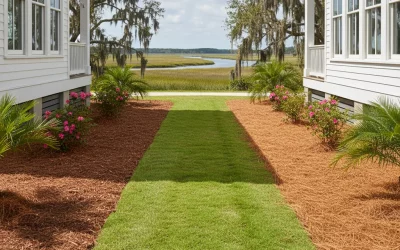
First impressions matter. Organic mulch delivers a rich, earthy color that contrasts beautifully with foliage right after installation. Unfortunately, UV rays bleach that chocolate hue to gray within months. Stone retains its natural shade for years, offering crisp definition along sidewalks and patios.
Durability also ties into erosion and foot traffic. Mulch can wash into lawns during downpours, while rock stays put, making it a sturdy border near downspouts or play areas. If you need a middle ground, consider a layered approach: mulch near plant roots for health, stone along pathways for longevity. Local mulch installation services can tailor to both in a single visit.
Decision Matrix: Mulch or Rock?
Below is a glance guide to help you decide which material suits your landscape best:
- Hot, dry summers + drought-tolerant plants → Choose rock for lower watering needs
- Mild climate + flower beds that crave nutrients → Opt for mulch for soil health
- Steep slopes prone to runoff → Combine stone borders with erosion-control wood chips
- Tight budget this year, but long-term homeownership goals → Invest in stone once, add compost to planting holes
- Love seasonal refresh and fragrant beds → Stay with mulch and pick a trusted mulch provider for annual top-offs
Still weighing mulch or rock? Consider blending both: mulch under shrubs, stone along fences. Your yard doesn’t have to be all or nothing.
Smart Ground Cover Choices with Bella Mulch
At Bella Mulch, we believe ground cover should simplify your weekends, not steal them. From fast online ordering to on-time delivery throughout South Carolina and Georgia, we streamline every step so you can focus on enjoying your landscape.
We deliver high-quality bulk products and offer professional blower-truck installation that leaves beds spotless—no wheelbarrows, no mess. Whether you’re sold on long-lasting stone or committed to nutrient-rich mulch, our team is ready to craft a solution that matches your climate, style, and budget. Reach out today to explore our options and schedule service.