
You’re standing in front of a pile of materials at a landscaping supply yard, trying to decide what actually belongs in your garden beds. Everything looks similar at first glance—dark, earthy, spreadable—but the labels say otherwise. Mulch. Wood chips. Bark.
So what’s the real difference, and does it actually matter for your yard?
It does. Choosing between these materials affects how your soil holds moisture, how your plants grow, and how often you’ll need to refresh your landscape. Understanding the difference between mulch and wood chips can help you avoid common mistakes and get better results from your landscaping project.
Are Wood Chips and Mulch the Same Thing?
This is where most people start. At a glance, they can look interchangeable, which leads to the common question: are wood chips and mulch the same thing?
Not exactly.
Mulch is a broader term. It refers to any material spread over soil to retain moisture, suppress weeds, and regulate temperature. Wood chips are one type of mulch—but not all mulch is made of wood chips.
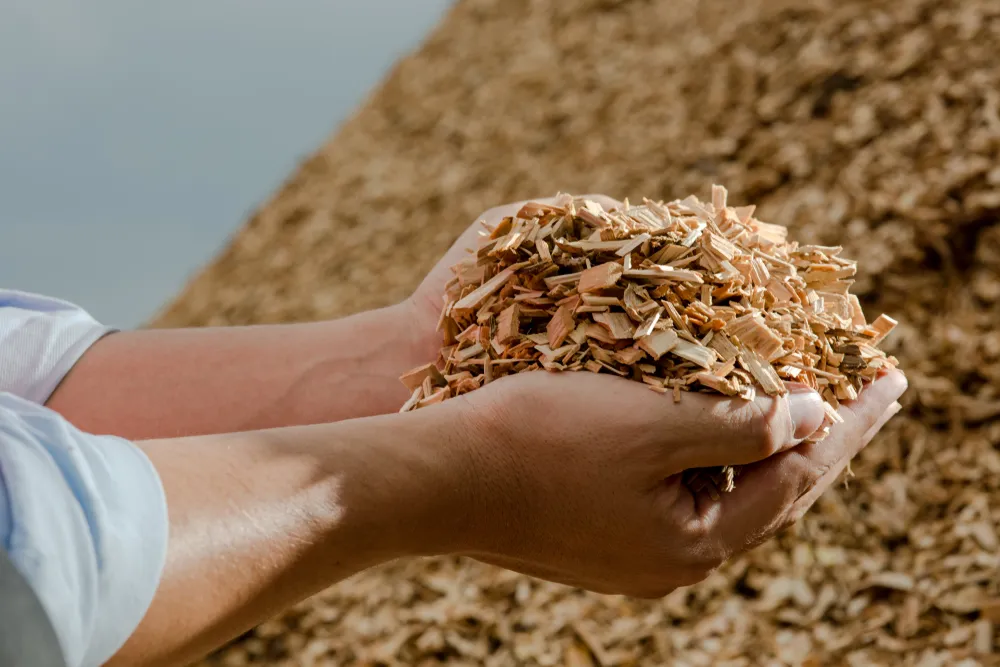
Wood chips are usually larger, coarser pieces of shredded wood. Mulch, especially the kind used in residential landscaping, is often processed more finely and designed for a cleaner, more uniform appearance.
That difference in size and processing plays a big role in how each material performs.
Bark Chips vs Mulch: What Sets Them Apart
When comparing bark chips vs mulch, the differences come down to texture, breakdown rate, and how they interact with the soil.
Bark chips are typically made from tree bark and tend to be chunkier. They break down more slowly and are often used in areas where long-lasting coverage is the goal.
Mulch, especially shredded hardwood mulch, is finer and spreads more evenly. Because it decomposes faster, it adds nutrients back into the soil over time.
Here’s how they compare at a glance:
- Bark chips
- Larger pieces
- Slower to break down
- Good for pathways or low-maintenance areas
- Mulch
- Finer texture
- Breaks down more quickly
- Better for planting beds and soil health
If your goal is to support plant growth, mulch usually offers more benefits. If you want longer-lasting coverage with less upkeep, bark chips may be the better fit.
How Mulch and Wood Chips Affect Your Landscape
Once you understand the material differences, the next step is thinking about how they perform in real conditions.
Mulch tends to sit more tightly across the soil, which helps block sunlight and reduce weed growth. It also holds moisture more consistently, which benefits plants during warmer months.
Wood chips, because of their size, allow more airflow and drain more quickly. That can be helpful in areas where water tends to collect, but it may not retain moisture as well in dry conditions.
The choice often depends on what your landscape needs most: moisture control and soil improvement, or durability and slower breakdown.
Mulch or Stone for Landscaping: Where Each Fits
Another comparison that comes up during planning is mulch or stone for landscaping. While both are used as ground cover, they serve very different purposes.
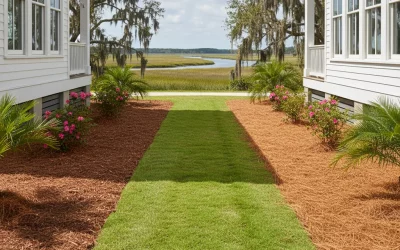
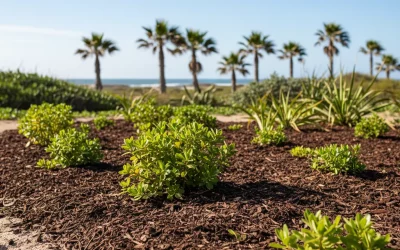
Mulch works best in planting beds, around trees, and in garden areas where soil health matters. It supports plant growth and gradually improves the soil as it breaks down.
Stone, on the other hand, is often used in decorative areas, walkways, or spaces where long-term coverage is more important than plant health. It doesn’t break down, so it requires less maintenance over time.
If your project involves plants, mulch is usually the better option. If you’re designing a low-maintenance area with minimal planting, stone can make more sense.
Choosing the Right Option for Your Project
The right material depends on how you plan to use the space. Before deciding, it helps to think through a few key factors.
Focus on plant health
If your goal is to support plant growth, improve soil, and retain moisture, mulch is the better choice.
Think about maintenance
Wood chips and bark chips last longer, which means less frequent replacement. Mulch may need to be refreshed more often, but it provides ongoing soil benefits.
Consider appearance
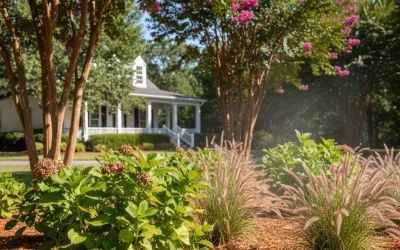
Mulch tends to create a more uniform, finished look in garden beds. Wood chips offer a more natural, rustic appearance.
Look at drainage
In areas where water tends to collect, wood chips may perform better because they allow more airflow and drainage.
Taking a few minutes to match the material to your landscape needs can make a noticeable difference in how your yard looks and performs over time.
Bella Mulch Helps You Get It Right from the Start
Choosing between mulch and wood chips doesn’t have to feel like guesswork. At Bella Mulch, we focus on helping you get the right material for your specific project, whether you’re refreshing garden beds or starting from scratch.
We provide high-quality mulch designed to support plant health, improve soil, and give your landscape a clean, consistent look. Our delivery process is simple, so you can spend less time figuring out logistics and more time getting your yard the way you want it.
If you’re ready to upgrade your landscape with the right materials, we’re here to help you make it happen.