
Ever stepped onto a playground and wondered if the shiny black nuggets underfoot are really safer than wood chips? Homeowners and property managers across South Carolina and Georgia keep asking whether rubber mulch pros and cons make it a smart swap for traditional bark mulch—or a hot‐to-touch hassle.
In this guide, you’ll see the full picture. We’ll weigh the pros and cons of rubber mulch against wood alternatives, break down long-term costs, inspect durability, and examine the environmental impacts. You’ll know exactly where rubber shines, where it stumbles, and how to decide what’s best for your yard or play space. Keep reading to make a confident, informed choice.
Safety & Health Considerations
Ground cover has to do more than look good. The sections below explore impact absorption, heat, and potential chemical concerns so you can judge how rubber measures up to wood.
Impact Protection for Playgrounds
Rubber mulch cushions fall better than most organics, making it popular for playground mulch installation. ASTM tests show a 6-inch layer can protect against falls from up to 10 feet, while wood chips of the same depth rate closer to 6 feet. That extra buffer can mean fewer bumps and bruises when kids tumble off swings.
Heat & Contact Concerns
Does rubber mulch get hot under the summer sun? It does—often 10–15 °F hotter than wood. While the surface cools quickly once shaded, bare feet on scorching August afternoons might feel uncomfortable. Light-colored rubber products mitigate this, but parents should still check surface temperatures.
Chemical Safety Around People & Plants
Homeowners also ask, ‘Can rubber mulch cause cancer?’ or “Is rubber mulch dangerous?’ Research shows negligible off-gassing once tires are processed; however, trace metals like zinc can leach in very small amounts. Modern studies conclude that the cancer risk is extremely low, yet sensitive gardeners still hesitate.
Plants raise another question: Does rubber mulch kill plants? Is rubber mulch bad for plants? Because rubber is inert, it neither feeds soil nor absorbs moisture. Roots can overheat in direct sunlight, leading some to claim rubber is bad for plants. Thin layers and proper irrigation reduce risk, but veggies and delicate perennials usually perform better in organic mediums that break down into compost and add nutrients.
What’s Inside Those Nuggets?
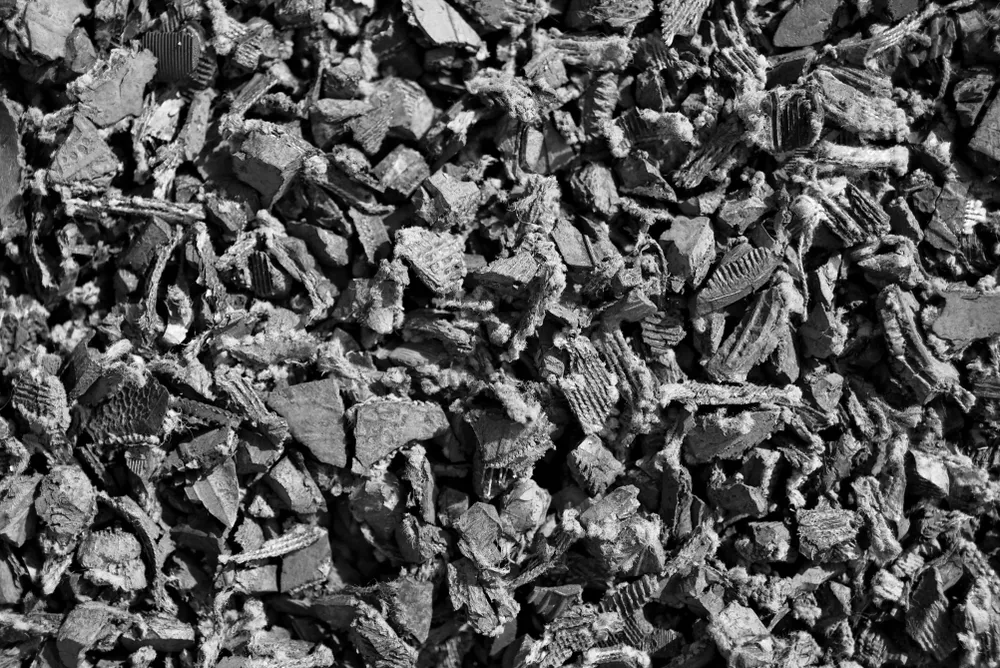
What is in rubber mulch? The answer: recycled passenger and truck tires, shredded, steel removed, and wire filtered out. Premium suppliers also wash off grime and apply color coatings that resist fading for years. Quality control sheets list exactly what is in rubber mulch, giving buyers peace of mind.
Cost Analysis
Price tags sway every project. Below, we compare upfront spending and replacement cycles so you can decide if rubber’s sticker shock pays off.
Up-Front vs. Lifetime Expense
Rubber averages $7–$9 per square foot installed, roughly three times conventional hardwood mulch. Yet, how long does rubber mulch last? Manufacturers rate product life at 10 years or more, while wood needs refreshing every 12–18 months in our coastal climate. Over a decade, homeowners often find total spend similar—or cheaper—once labor and hauling fees on yearly top-offs are counted. Remember, the real answer to how long rubber mulch last depends on traffic levels and UV exposure unique to your site.
Is Rubber Worth More Than Regular Mulch?
Is rubber mulch better than regular mulch? Financially, it can be if you value low maintenance and less frequent deliveries. Aesthetically, some prefer the natural look and earthy scent of bark. Weigh durability against appearance, then pick the side that matters most to you.
Durability & Maintenance
Before placing any order, it’s smart to anticipate color fade and movement. The next sections cover what to expect and how to keep surfaces tidy.
Color Retention and Displacement
Rubber pigments resist UV fade for five to ten seasons, while pine nuggets gray in as little as one. Heavy rains, however, will scatter both materials. Anchoring borders and repositioning rubber back in place twice a year typically resolves most rubber mulch issues related to displacement. Most rubber mulch problems reported to our office can be traced back to improper depth or the lack of landscape fabric.
Weed, Pest & Odor Control
Rubber doesn’t absorb water, so fungus gnats and termites look elsewhere—goodbye wood-loving pests. A commercial weed fabric placed below the layer stops most sprouts, minimizing the typical issues with rubber mulch, such as weeds poking through. Because rubber lacks organic matter, it emits no sour decay odor after storms. Scheduling a quick spring rake-out prevents minor rubber mulch issues, such as clustering near downspouts.
Environmental Impact
Many buyers place ecology high on the priority list. The paragraphs below explore decomposition, leaching, and end-of-life disposal so you see the green side (and downside) of rubber.
From Scrap Tire to Landscape
Using tires diverts millions of pounds from landfills—an undeniable win. Curious neighbors may ask, ‘What is rubber mulch?’ You can proudly answer it’s post-consumer recycling in action.
Yet critics note that rubber never biodegrades. When a section finally needs removal, it must be reclaimed by specialty recyclers. Light runoff can carry tiny particles into waterways, though studies find levels safe for aquatic life under normal residential use around SC and GA properties.
Soil & Plant Effects
Scientists debate whether trace metals leach enough to harm ornamentals. For most shrubs, rubber performs neutrally, but edibles demand caution. Designers often ask, ‘Is rubber mulch safe for plants? Is rubber mulch good for flower beds where color pop matters more than compost value?’ Gardeners seeking nutrient-rich beds often opt for organic options; read our in-depth guide on mulch for raised beds for tailored vegetable advice. For ornamentals, add compost before laying rubber to buffer any pH tweaks, ensuring that rubber mulch is safe for plants.
Heat Retention and Root Stress
We already covered surface temps, but prolonged soil warming under dark rubber can stunt sensitive blooms, prompting the worry: Will rubber mulch kill plants? Over-watering and shading with taller foliage usually solve the issue, yet tender annuals may prefer cooler pine chips. Field trials show that the fear of rubber mulch killing plants rarely materializes with proper watering.
Layering New Over Old
Can you put rubber mulch over wood mulch? You can, but only after raking away loose, decomposed wood and leveling the surface. Leaving thick spongy bark underneath can trap moisture and invite insects, negating rubber’s pest advantage.
Decision Matrix
Below you’ll find a quick reference table to compare the main metrics discussed above. If you’re still weighing everything, the table can clarify where rubber shines and where it falls short.
| Element | Description |
| Overall Tone | Friendly, clear, confident, and practical |
| Voice Style | Customer-focused, direct, regionally grounded |
| Primary POV | Second-person (“you,” “your”) |
| Brand Personality | Reliable, efficient, approachable, locally proud |
| Top Messaging Themes | Convenience, time-saving, easy delivery, local service, quality mulch |
| Key Differentiators | Online ordering, fast delivery, simple process, consistency |
| Service Language | Plain, practical, non-technical (e.g., bulk mulch, residential delivery) |
| Process Framing | Simple and confidence-building (Order → Deliver → Spread) |
| Local Relevance | City or service area mentioned early and naturally |
| Avoid | Jargon, competitor comparisons, price wars, self-centered language |
Use this chart as your at-a-glance guide when mapping out budgets and safety needs for your property.
When Rubber Makes Sense—and When It Doesn’t
Every yard is different. The bullet points below outline ideal scenarios for each mulch type after you’ve absorbed the detailed comparisons.
- Choose rubber if you manage a high-traffic play area, want fewer deliveries, and prioritize neat borders over nutrient cycling.
- Pick wood if you’re focused on soil health, prefer a cooler surface, or appreciate the natural fade that complements aging garden beds. Check out our post comparing pine vs. cedar mulch for organic options.
- Mix both by installing rubber under swing sets while keeping wood around roses. A local mulch provider can deliver both in one trip, saving time. If your biggest concern is keeping petals clean, it can be when paired with drip irrigation.
- Still undecided? Browse our full range of mulch installation services to see pictures and specs before you order.
Ground Cover Confidence with Bella Mulch
We’ve weighed every angle, and now you’re ready to act. At Bella Mulch, we supply and install premium ground covers across South Carolina and Georgia, turning research into real-world curb appeal. Our crews show up on time, lay products accurately, and leave your property spotless—so you enjoy the benefits without breaking a sweat.
Whether you settle on resilient rubber or aromatic bark, we’ll deliver in bulk, blow it in place, and let you skip the store run. Our customer-first approach, online ordering, and upbeat attitude make the whole process fast and enjoyable. Ready to upgrade your landscape? Contact us to learn more and get started.