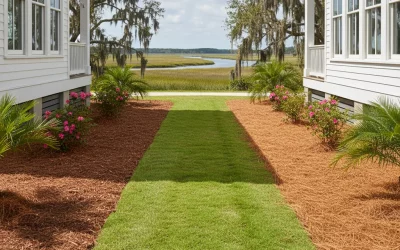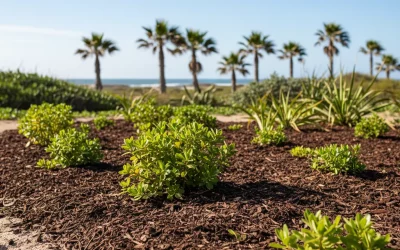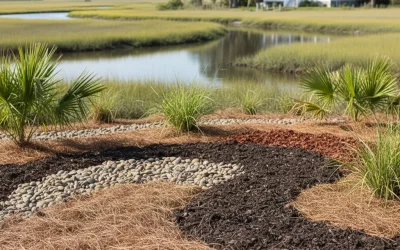

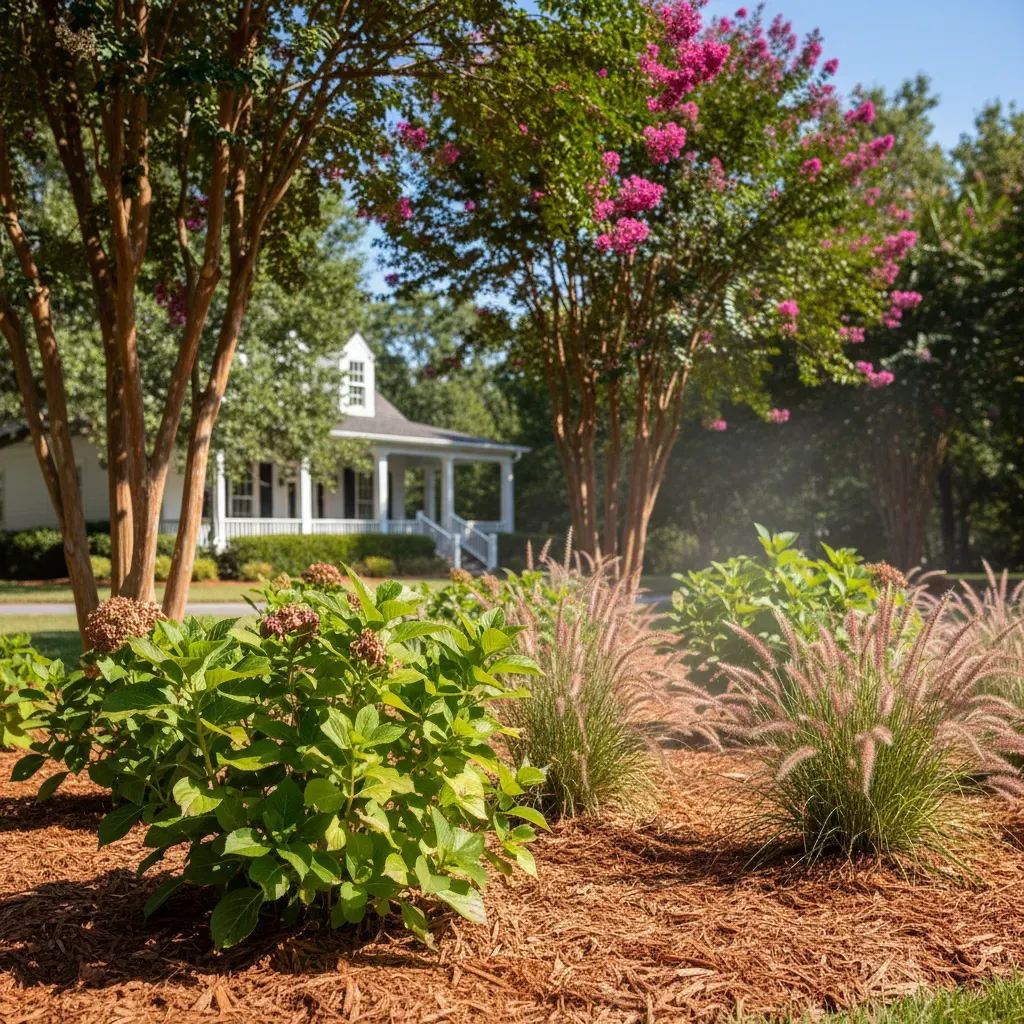
By 9 a.m., the sun is already warming your landscape beds.
By noon, exposed soil can feel hot and dry. By late afternoon, plants that looked fine in the morning may start showing signs of stress, especially in beds near driveways, sidewalks, or sunny walls.
That’s summer in South Carolina.
The heat doesn’t only affect what you see above ground. It changes how quickly moisture leaves the soil, how warm plant roots become, and how often your landscape needs attention. Using the right mulch for summer heat helps create a layer of protection between the soil and the weather working against it.
Here’s what that protection looks like as the day unfolds.
8 A.M.: The Soil Starts With More Moisture
Early morning is often the best time to water because temperatures are lower and the sun is less intense.
Without mulch, much of that moisture begins escaping as soon as the day warms up. Exposed soil dries faster, especially in sandy areas where water already drains quickly.
A layer of moisture retention mulch slows evaporation by shielding the soil from direct sunlight. Water stays available around plant roots longer instead of disappearing before the hottest part of the day.
Mulch won’t replace regular watering, but it can help each watering session go further.
11 A.M.: The Ground Begins Heating Up
You can feel the difference between standing on grass and standing on pavement in summer. Soil experiences a similar contrast.
Bare ground absorbs heat throughout the morning. Mulched soil warms more gradually because the material above it acts as a buffer.
That matters for plant roots, which perform better under steadier conditions. Repeated swings between hot daytime soil and cooler nighttime temperatures can add stress, especially during long stretches without rain.
In South Carolina landscaping, where hot weather can settle in for weeks, that extra layer can help create a more stable root environment.
2 P.M.: The Toughest Areas Start Showing Stress
By early afternoon, the hottest parts of the yard become easier to spot.
Beds along driveways may dry first. Foundation landscaping that faces the afternoon sun can feel noticeably warmer. Young plants and shallow-rooted flowers may begin drooping even when they were watered earlier.
These areas often benefit most from mulch because they face heat from more than one direction. The sun warms the soil from above, while nearby pavement, brick, or concrete can radiate additional heat.
Instead of treating the whole yard the same, pay attention to where heat builds fastest. Those beds may need more frequent depth checks and occasional touch-ups during summer.
4 P.M.: Weeds Compete for What’s Left
Heat isn’t the only challenge during summer. Weeds continue competing with landscape plants for water and nutrients.
Mulch helps limit that competition by reducing the amount of sunlight reaching weed seeds near the soil surface. Fewer weeds mean more available moisture for the plants you actually want in the bed.
This is one reason proper coverage matters. A thin, patchy layer may look refreshed, but it won’t provide the same protection as an even layer spread at the right depth.
For most beds, two to three inches is enough. Piling on more can limit airflow and prevent water from reaching the soil as effectively.
6 P.M.: A Protected Bed Recovers More Easily
When temperatures begin dropping, mulched beds tend to hold onto more of the moisture they received earlier in the day.
That gives plants a better chance to recover overnight. The soil remains more stable, roots stay protected, and the landscape is better prepared for another hot day.
The difference may not feel dramatic after one afternoon. Over an entire South Carolina summer, though, better moisture control and steadier soil temperatures can reduce stress across the landscape.
Mulch works quietly. That’s part of its appeal.
Your Summer Mulch Check
Before adding more material, take a quick walk around your property and look at the beds that receive the most sun.
Check whether bare soil is visible, whether the mulch has shifted after heavy rain, and whether some areas dry much faster than others. You may find that the whole landscape doesn’t need attention. A few heat-prone beds may need a light refresh while shaded spaces still have plenty of coverage.
The goal isn’t to spread more mulch everywhere. It’s to place the right amount where summer is having the greatest impact.
Help Your Landscape Handle the Heat With Bella Mulch
South Carolina summers aren’t subtle, but your landscape doesn’t have to face them unprotected.
At Bella Mulch, we provide quality mulch and dependable delivery for homeowners who want healthier beds without spending the day hauling bags from the store. We help you get the material you need for sunny foundation beds, tree rings, garden areas, and full-yard refreshes across the Lowcountry.
We bring the mulch. You give your landscape a better shot at handling the heat.